Make a mood board spatial
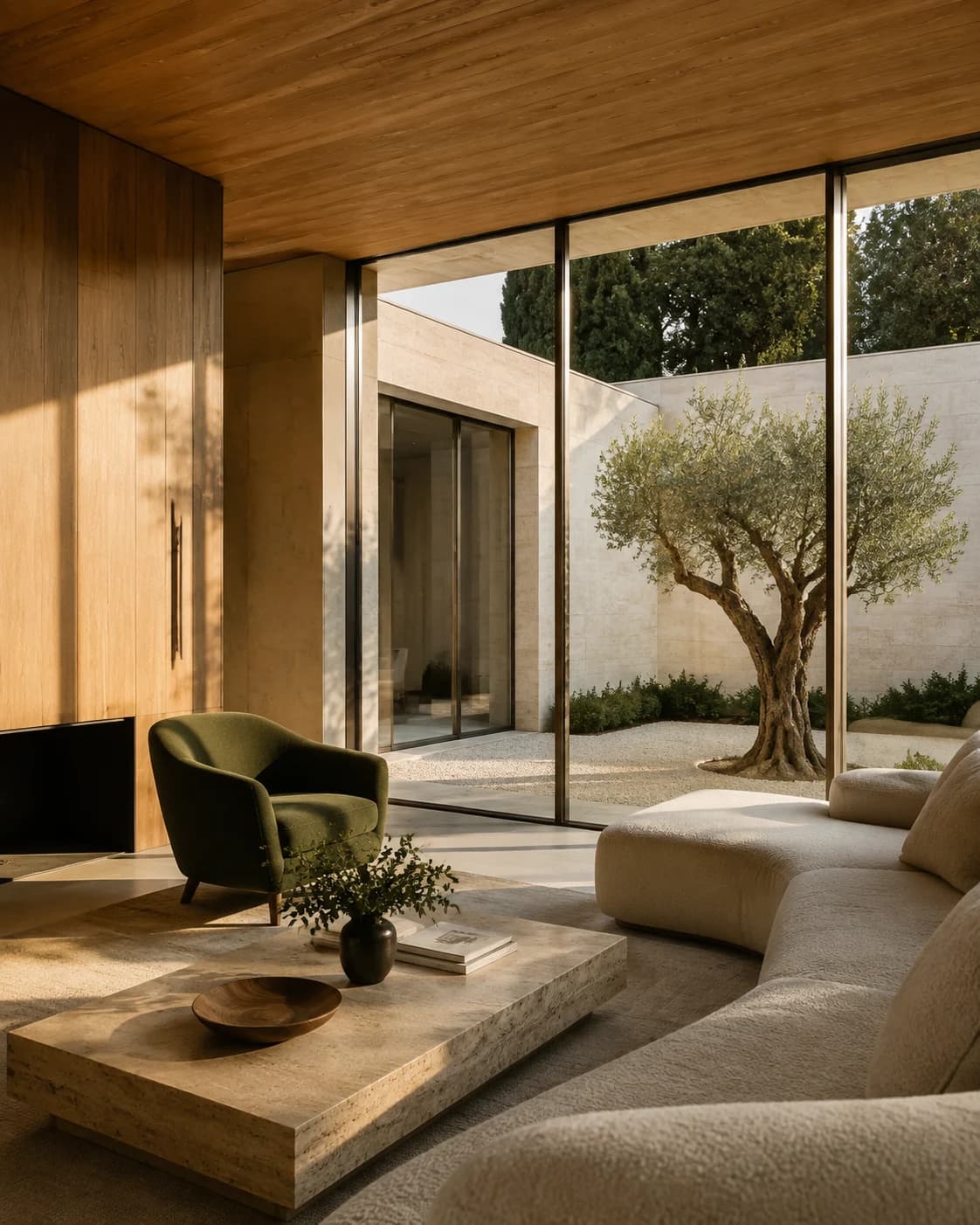
Translate a palette and style direction into a view of the actual room so clients can react to the whole composition.
For interior designers
Turn room photos, sketches and early concepts into interior visuals for design exploration, client presentations and clearer material conversations.
01 /In your practice
Translate a palette and style direction into a view of the actual room so clients can react to the whole composition.
Present a small number of genuinely different directions instead of asking clients to imagine combinations from disconnected samples.
Use visuals to build confidence in the direction before final furniture, finishes and installation decisions are made.
02 /Workflow
Choose a photograph that clearly shows scale, openings and fixed features from the most useful design viewpoint.
Describe the palette, materials, furniture character and atmosphere you want the client to evaluate.
Pair the selected visual with the actual samples, specifications and notes required to deliver the design.
03 /Questions
Yes. You can explore a redesigned direction from a furnished room photograph as well as stage an empty space.
Yes. Create each direction separately so the client can compare coherent options rather than a mixed brief.
No. The image is a conceptual visualization. Product sourcing, dimensions, availability and specifications remain part of the designer's workflow.
Yes. After approving the interior image, you can create a short walkthrough-style video for the presentation.